
Many Bangkok office workers assume that neck stretches or an ergonomic chair are the only real solutions for office syndrome, but targeted hair scalp care can deliver fast, measurable relief that those approaches simply cannot reach.
The connection between your scalp and your chronic neck tension, tension headaches, and postural stiffness is deeply physiological. Professional scalp therapy is designed to address it directly.
This article explains the science behind scalp-related pain, which treatments work best for office syndrome relief, what to expect during a session, and practical steps you can take at home today.
Your Desk Job Is Doing More Damage Than You Realise
The Symptoms Most People Never Trace Back to Their Scalp
Office syndrome is rarely just a neck problem. Many of its most persistent symptoms originate in the hair scalp, an area most people never think to treat. Tension headaches that begin at the base of the skull, a dull pressure behind the eyes, and a feeling of tightness across the top of the head are all classic signs that scalp muscles are overworked and underserved.
Left unaddressed, this tension radiates downward into the neck and shoulders, creating a cycle of discomfort that no amount of desk stretching can fully resolve.
What Happens to Your Hair Scalp After a Long Day at the Office
When you hold your head forward to read a screen, the muscles of your neck and upper back bear a disproportionate load.
This sustained effort travels upward through the fascia, the connective tissue that wraps your entire skull, pulling the hair scalp tight and restricting blood flow.
Hours of this posture leave the scalp stiff, the circulation sluggish, and the nerves sensitized. The result is the familiar, grinding fatigue that defines a long day at the office.
Why Scalp Tension Becomes a Headache — Literally
The Nerves That Connect Your Scalp to Your Pain
The scalp is richly innervated by several major nerve networks.
These include the greater occipital nerve at the back of the skull, branches of the trigeminal nerve across the forehead and temples, and the cervical nerves that connect the neck to the head.
When any of these pathways become compressed or irritated by tight muscles and restricted fascia, pain does not stay local — it travels.
How a Knot in Your Scalp Ends Up Feeling Like a Migraine
This phenomenon is known as referred pain. Tension in the occipital region, for example, can mimic a migraine. Tightness across the temples can create the sensation of a vice around your skull.
Releasing these trigger points through targeted hair scalp therapy interrupts the pain pathway at its source — providing genuine office syndrome relief rather than simply masking the symptoms.
Research on massage therapy has explored its potential role in supporting people with neck pain and pain-related conditions. While head spa should not be presented as a medical treatment for office syndrome or headaches, gentle scalp, neck, and shoulder massage may be a helpful part of a relaxation-focused self-care routine.
Beneath the Surface: What Chronic Tension Does to Your Scalp
Why Blood Flow Is the Key to Lasting Relief
Healthy scalp tissue depends on consistent blood flow to deliver oxygen and remove metabolic waste.
Chronic tension constricts the small blood vessels beneath the skin, leaving the hair scalp starved of nutrients and prone to inflammation.
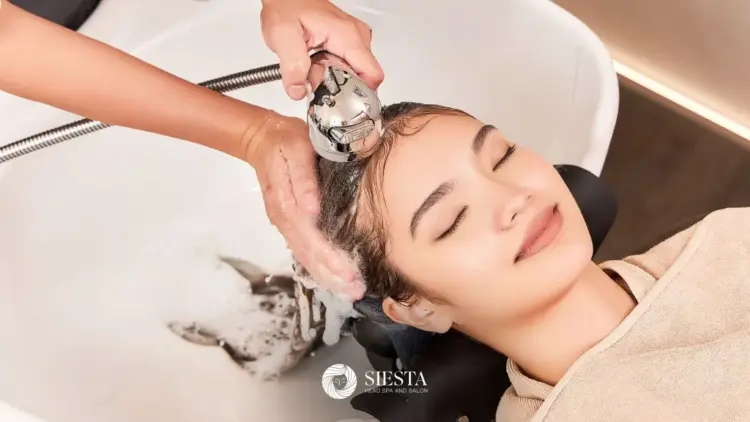
Professional massage stimulates microcirculation, flooding the tissue with fresh blood and accelerating the body’s natural recovery process. Many guests describe the experience as deeply relaxing and pampering, with a lighter, calmer feeling around the scalp, head, neck, and shoulders after the session.
The Knots You Cannot Feel — But a Therapist Can
The galea aponeurotica — the fibrous sheet covering the top of the skull — can become adhered and restricted under prolonged tension.
These fascial restrictions create localized trigger points: small, hypersensitive knots that refer pain to distant areas of the head and neck.
Skilled therapists are trained to identify and release these points with precise, sustained pressure, unwinding the layers of tension that have built up over weeks or months of desk work.
The Treatments That Actually Address the Root of the Problem
More Than a Massage: How Skilled Hands Unwind Deep Tension
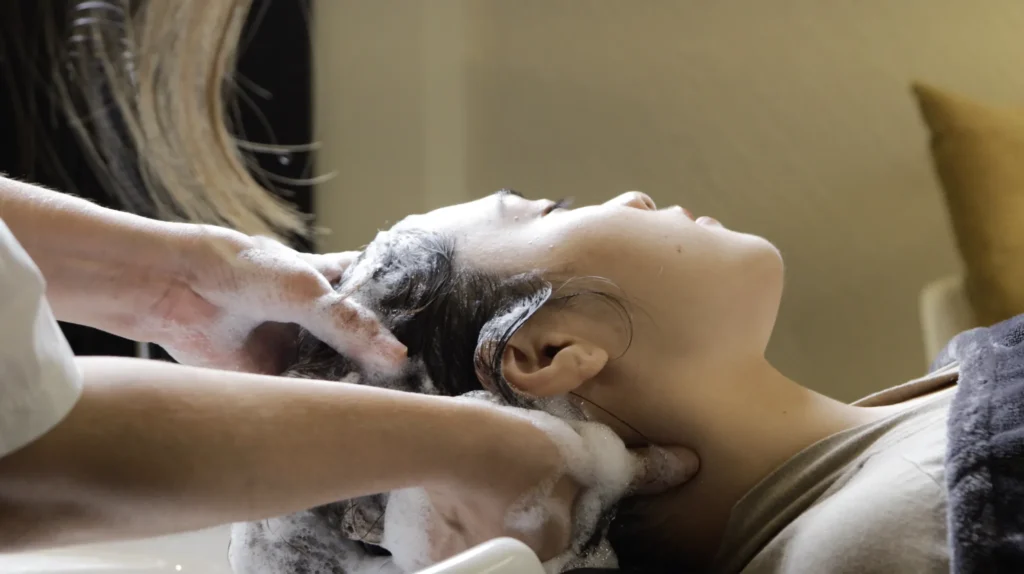
A professional scalp massage goes far beyond surface-level relaxation.
Therapists use a curated sequence of techniques, including deep circular pressure, myofascial release, and acupressure along the occipital ridge and temporal lines, to systematically release tension from the hair scalp.
As each layer of tightness unwinds, you will feel the stiffness in your neck begin to soften and your breathing deepen naturally.
Steam, Serums and Exfoliation: Resetting the Scalp from the Inside Out
Therapeutic massage is often paired with complementary treatments that amplify the results.
Gentle scalp exfoliation removes the buildup that restricts follicle health and circulation. Clinical serums formulated with calming and anti-inflammatory actives are then applied to nourish the sensitized tissue. Warm steam opens the pores and softens the fascia, making it significantly more responsive to massage.
Together, these steps create a comprehensive approach to office syndrome relief that addresses both the physical and physiological dimensions of the condition.
What a Professional Can Do That You Simply Cannot Do at Home
A Treatment Plan That Fits Your Specific Pattern of Pain
No two cases of office syndrome are identical.
The location of your trigger points, the severity of your fascial restrictions, and your individual pain thresholds all require a tailored approach.
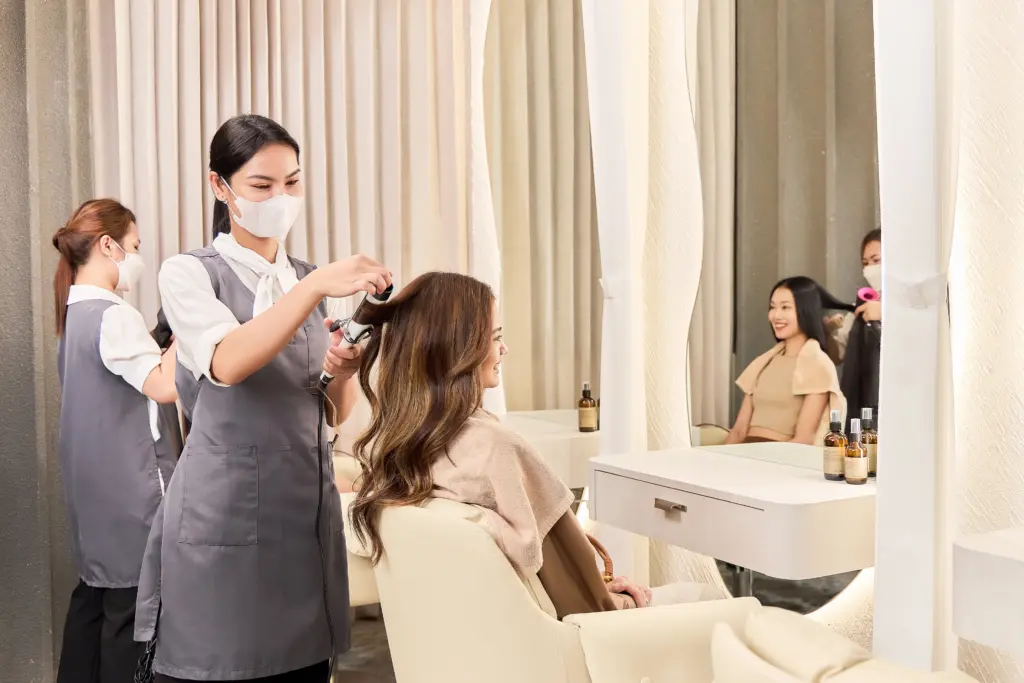
A trained therapist at a reputable hair spa in Bangkok conducts a thorough scalp assessment before each session, ensuring that every treatment is precisely calibrated to your needs.
At Siesta Head Spa, the experience is also supported by a calm private room environment, allowing guests to slow down, relax more deeply, and enjoy scalp care away from the noise and distractions of the city.
The Tools and Products That Change the Results
Professional settings offer therapeutic tools that simply cannot be replicated at home.
High-frequency scalp devices stimulate deep circulation. Clinical-grade serums deliver active concentrations unavailable over the counter. Purpose-built steam equipment prepares the hair scalp for deeper treatment.
These elements, combined with the expertise of a skilled therapist, produce results that are measurably more effective than self-massage alone.
How to Make the Relief Last Longer at Home
Small Daily Habits That Keep Tension from Creeping Back
To extend the benefits of your session, integrate these habits into your daily routine:
- Scalp tapping: Use your fingertips to gently tap across your entire scalp for two minutes each morning to stimulate circulation.
- Occipital release: Interlace your fingers behind your head and apply gentle forward pressure to stretch the base of the skull.
- Posture reset: Every hour, draw your chin back, roll your shoulders down, and take three slow, deep breaths to release accumulated tension.
Choosing the Right Products for Your Weekly Scalp Routine
Look for scalp serums and oils containing peppermint, rosemary, or niacinamide, ingredients clinically associated with improved circulation and reduced scalp inflammation.
A weekly self-massage of five to ten minutes, applied with light oil, can meaningfully slow the return of tension between professional visits.
Frequently Asked Questions
Can a hair spa really reduce my office-related headaches?
A hair spa should not be presented as a medical treatment for headaches. However, for guests who often feel office-related tension around the scalp, neck, and shoulders, professional scalp care and gentle massage may help support relaxation, comfort, and a more comfortable self-care routine. Research on massage therapy has explored its potential role in supporting people with neck pain and pain-related conditions, while posture adjustment, stretching, rest, and ergonomic habits are also important for office workers.
How often should I book scalp treatments for lasting office syndrome relief?
For active symptoms, a bi-weekly schedule is recommended to break the cycle of chronic tension. Once symptoms are managed, a monthly maintenance visit is typically sufficient to keep the hair scalp healthy and the pain at bay.
Are scalp treatments safe if I have hair loss or sensitive skin?
In most cases, yes. Professional therapists adapt their techniques and product selection to your specific scalp condition. Always disclose any sensitivities or medical history during your initial consultation so your treatment plan can be customized accordingly.
For office workers, research also supports the importance of workplace exercise, posture awareness, and ergonomic habits in managing work-related musculoskeletal discomfort. This is why regular head spa sessions are best positioned as one supportive part of a broader self-care routine, rather than a standalone treatment.
Key Takeaways
Targeted scalp care at a professional hair spa, especially in a calm private room environment, may support relaxation around the scalp, neck, and shoulders, especially for guests who spend long hours at a desk. For office-related tension, the best results often come from combining head spa care with posture awareness, stretching, rest, and ergonomic habits.
References
- Western Massage Therapies in the Management of Neck Pain: A Systematic Review
PubMed - Use of Massage Therapy for Pain, 2018 to 2023: A Systematic Review
PubMed - Effectiveness of Workplace Exercise Interventions in the Treatment of Musculoskeletal Disorders in Office Workers: A Systematic Review
BMJ Open - Ergonomics and Work-Related Musculoskeletal Disorders
CDC / NIOSH
Siesta Head Spa and Salon
The First Authentic Thai Head Spa
Branches and Opening Hours
Open daily: 10:00 AM–8:00 PM
📍 Siesta Head Spa – Emsphere Branch
📞 Call / WhatsApp: +66-88-681-0791
📍 Siesta Head Spa – Gaysorn Amarin Branch
📞 Call / WhatsApp: +66-88-992-2977
📱 LINE: @Siesta
📸 Instagram: @Siesta.Headspa
🌐 Website: siestaheadspa.com